
What You’ll Learn
- The New Regulatory Imperative: Why Compliance is King
- Institutional Inflow: Wall Street’s Deepening Embrace of Digital Assets
- The Stablecoin Revolution: From Payments to Programmable Money
- Real-World Asset Tokenization: Unlocking Trillions in Value
- The AI-Crypto Nexus: Intelligent Systems and Autonomous Finance
- Navigating the Volatility: Strategies for Astute Investors
- The Road Ahead: A Data-Driven Outlook for the Digital Economy
The digital economy is undergoing a seismic shift. This isn’t your grandfather’s market, nor is it the “Wild West” of early crypto. Today, March 3, 2026, the landscape is defined by an unprecedented convergence of innovation, institutional might, and, crucially, a rapidly maturing regulatory environment. Consequently, for anyone tracking crypto news, the narrative has fundamentally changed. We are witnessing not merely trends, but powerful forces reshaping how digital assets are perceived, traded, and integrated into the global financial system. The speculative fervor of yesteryear is giving way to a new era of utility, compliance, and strategic deployment. This transformation is driven by a series of regulatory “earthquakes” and market shifts that demand immediate attention from both Silicon Valley disruptors and Wall Street titans.
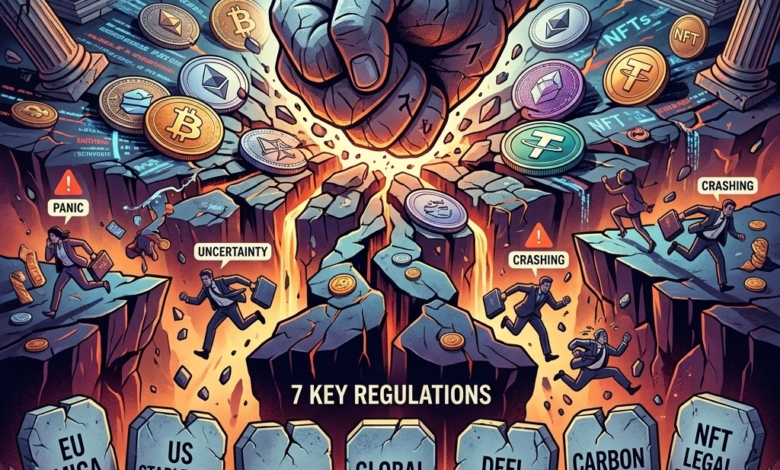
The New Regulatory Imperative: Why Compliance is King in Crypto news
The era of ambiguous digital asset regulation is rapidly fading. Across the globe, governments and financial bodies are enacting comprehensive frameworks, transforming the crypto landscape into a more structured and accountable domain. For instance, the European Union’s Markets in Crypto-Assets (MiCA) regulation is now in active enforcement. Subsequently, it has become a global benchmark, promoting compliance for stablecoins and exchanges alike. This landmark legislation provides a clear regulatory framework, which is accelerating stablecoin adoption and paving the way for traditional financial institutions to offer crypto services.
In the United States, significant legislative strides were made in 2025. The passage of the Guiding and Establishing National Innovation for U.S. Stablecoins (GENIUS) Act, signed into law on June 18, 2025, represents a pivotal moment. This Act mandates stablecoins to be backed 1-to-1 by the US dollar or other low-risk assets, bolstering trust and stability. Moreover, legislative initiatives like the Digital Asset Market Clarity Act of 2025 (CLARITY Act) aim to resolve jurisdictional friction between the SEC and CFTC, bringing greater certainty to digital asset treatment. These developments underscore a global push towards robust anti-money laundering (AML) and sanctions compliance, making accountability the new standard in crypto. As the industry moves forward, firms must invest in scalable, risk-based compliance programs to navigate this increasingly complex environment.
Industry experts are unanimous: regulatory clarity is no longer a theoretical concept but a tangible tailwind for adoption. “The era of leniency is likely behind us. Accountability is the new standard in crypto compliance,” states a report from Grant Thornton. Consequently, firms that act decisively will not only mitigate risks but also position themselves as trusted participants in this evolving digital economy. Furthermore, the Financial Action Task Force (FATF) continues to set global standards for AML and CFT measures in the crypto space, urging jurisdictions to strengthen enforcement and improve cross-border cooperation. This collective regulatory momentum is fostering an environment where digital assets can truly integrate with traditional finance.
Institutional Inflow: Wall Street’s Deepening Embrace of Digital Assets
The suits and ties have undeniably arrived. Institutional capital is now flowing vertically into the crypto market, marking a profound shift from hesitant exploration to strategic allocation. This influx is largely driven by improved regulatory clarity and the availability of sophisticated, regulated financial products. Therefore, Bitcoin Exchange-Traded Funds (ETFs), approved in the U.S., have integrated Bitcoin into traditional financial infrastructure, attracting billions in capital inflows. BlackRock’s iShares Bitcoin Trust (IBIT), for example, quickly emerged as a dominant fund, holding more assets under management than many competitors. This signals a maturation of the market.
Institutional adoption extends beyond Bitcoin ETFs. Traditional finance (TradFi) companies are actively integrating digital assets into their business models. Subsequently, firms like JP Morgan have issued USD deposit tokens, and Citi has integrated Citi Token Services for real-time cross-border payments. This convergence between TradFi and DeFi is expected to intensify in 2026, blurring the lines between traditional and decentralized finance. According to Silicon Valley Bank’s 2026 predictions, institutional balance sheet adoption reinforces this trend, with Bitcoin becoming a mainstream corporate asset used for treasury allocation and collateral. By Q3 2025, at least 172 publicly traded companies held Bitcoin, holding roughly 5% of the circulating supply. This massive institutional presence lends credibility and stability to the entire ecosystem.
[IMAGE: Institutional investors looking at crypto charts, Alt Text: Institutional crypto news and market trends 2026]
Experts from Grayscale Research anticipate 2026 will accelerate structural shifts in digital asset investing, underpinned by macro demand for alternative stores of value and improved regulatory clarity. Consequently, this should bring in new capital and broaden adoption among advised wealth and institutional investors, effectively bridging public blockchains more fully into mainstream financial infrastructure. Major crypto hedge funds like Pantera Capital, BH Digital, and Multicoin Capital are deploying strategies across venture stakes, new token launches, and liquid digital assets, further solidifying institutional engagement. This growing institutional footprint underscores a significant evolution in the crypto news cycle, emphasizing long-term value over short-term speculation.
The Stablecoin Revolution: From Payments to Programmable Money
Stablecoins have cemented their position as a pivotal innovation, transitioning from a mere trading tool to robust payment infrastructure. Consequently, they are increasingly recognized as the “internet’s dollar”. This meteoric rise is driven by clearer regulations, enterprise adoption, and their inherent efficiency in facilitating cross-border payments and treasury operations. For example, stablecoins are capable of cutting currency conversion costs and delays, significantly reducing intermediaries, and supporting faster cross-border settlement. The EU’s MiCA regulation, specifically, is accelerating stablecoin adoption by requiring issuers to be licensed and offering a clear framework for financial institutions.
The growth in stablecoin volumes is staggering. Circle’s IPO in summer 2025 catalyzed significant visibility, and mentions of stablecoins on US corporate earnings calls increased more than tenfold over the year. Our stochastic model forecasts that the total stablecoin market cap could reach a target range centered around $1.2 trillion by the end of 2028. This growth is not limited to crypto-native transactions; stablecoins are becoming a practical tool for global payments, with several countries exploring their use for remittances and programmable settlement. Furthermore, recent pilots have explored stablecoin settlement for bank transactions through established networks, with broader implementation expected in 2026.
Looking ahead, compliant stablecoins like USDC and PYUSD are expanding their application scenarios in DeFi lending and cross-border payments, with annual trading volumes potentially exceeding $10 trillion. The volume of payments via crypto cards using stablecoins grew more than sixfold in 2025, exceeding $106 million per week, and experts predict monthly volumes to reach $500 million in 2026. This underlines their critical role as the “blood” of the cryptocurrency ecosystem. DeFi & Web3: 7 Explosive Trends Reshaping the Digital Economy in 2026! further elaborates on how stablecoins are integral to the evolution of decentralized finance, enabling complex financial products and enhancing liquidity.
Real-World Asset Tokenization: Unlocking Trillions in Value
A leading trend permeating the digital asset space in 2026 is the explosive growth of Real-World Asset (RWA) tokenization. This revolutionary concept involves converting physical or financial assets, such as real estate, bonds, commodities, and even intellectual property, into blockchain-based tokens. Consequently, this process unlocks unprecedented liquidity, transparency, and efficiency in traditionally illiquid markets. Larry Fink and Rob Goldstein of BlackRock have explicitly stated that “tokenization can greatly expand the world of investable assets beyond the listed stocks and bonds that dominate markets today”.
The experimentation in RWA tokenization has been ongoing for over a decade, but 2026 marks an inflection point with increased momentum from traditional financial institutions. For example, BlackRock’s BUIDL Fund has already raised over $240 million on Ethereum by tokenizing US treasuries, while HSBC launched tokenized gold trading for 24/7 real-time settlement. Hong Kong has also issued tokenized green bonds using blockchain for enhanced transparency. These initiatives demonstrate the practical utility and growing adoption of tokenization, attracting serious capital and reshaping investment paradigms.
From an investor strategy perspective, RWA tokenization presents both significant opportunities and inherent risks. The fractional ownership enabled by tokenization allows smaller investors to access high-value assets previously exclusive to institutions. However, navigating the complex regulatory landscape for tokenized securities remains the biggest hurdle. Astute investors are performing thorough due diligence, focusing on projects with clear legal frameworks and robust compliance. As this sector matures, it is poised to become a multi-trillion-dollar market, integrating a vast array of assets onto the blockchain and democratizing access to wealth. Experts expect RWA growth to increase more than fourfold (excluding stablecoins) in 2026, shifting towards a more diversified basket of products, including tokenized stocks and ETFs. This makes it a crucial area to monitor in any comprehensive crypto news analysis.
The AI-Crypto Nexus: Intelligent Systems and Autonomous Finance
The convergence of Artificial Intelligence (AI) and blockchain technology is creating a powerful new paradigm: intelligent, autonomous, and highly efficient financial systems. Subsequently, this “AI-Crypto Nexus” is rapidly evolving, moving beyond mere theoretical discussions to practical implementation in 2026. The most impactful trend is the shift of AI agents into core crypto workflows. Instead of simply providing analysis, AI agents are now capable of autonomous execution, managing portfolios, adjusting risk, and routing transactions with unprecedented speed and precision. This is particularly critical in the 24/7, high-velocity crypto markets, where human emotions and slower decision-making can lead to substantial losses.
AI is also enhancing blockchain infrastructure itself. For example, AI-enhanced blockchain infrastructure is improving speed, security, and network resilience, leading to smarter and more reliable systems. Technologies like x402 enable high-frequency microtransaction settlement, supporting agents that can launch, govern, and secure on-chain services. This development promises to redefine how we interact with crypto, bringing significant efficiency and enhanced security to DeFi operations. Furthermore, decentralized AI chatbots and advanced information aggregation tools are empowering both individuals and businesses to make smarter decisions and operate more efficiently within the digital asset ecosystem.
[IMAGE: AI robots interacting with blockchain, Alt Text: AI and crypto news developments 2026]
Expert insights suggest that “Know Your Agent” (KYA) compliance will become a real conversation, focusing on identity, permissions, and audit trails for non-human actors. Wallet security models are expected to shift from a single private key to permissioned agent roles, allowing for read-only, trade-only, or time-locked access, thereby significantly enhancing security. The integration of AI with Web3 is one of the main developments driving the evolution of blockchain, addressing AI’s biggest gap: trust in data and processes. This enables open, accountable AI systems outside corporate silos. Projects like SingularityNET and Fetch.ai are providing decentralized infrastructure for AI development, fostering an open marketplace for AI tools and enabling autonomous agents to exchange data and services on-chain. The implications of this nexus for the future of finance and the broader digital economy are truly profound, driving forward the conversation in crypto news.
Navigating the Volatility: Strategies for Astute Investors
While the crypto market is maturing, volatility remains an inherent characteristic, influenced by macroeconomic trends, regulatory shifts, and technological advancements. For astute investors, navigating these fluctuations requires a balanced strategy, focusing on both opportunities and risk mitigation. Currently, Bitcoin (BTC) is trading near $92,000, still consolidating after a sharp correction, with experts predicting it could trade between $100,000 and $140,000 in a base-case scenario for 2026, reflecting steady institutional inflows balanced by profit-taking and macro uncertainty. However, options markets price nearly equal odds of Bitcoin hitting $70,000 or $130,000 by mid-2026, indicating significant near-term uncertainty.
Experts like “EllioTrdes” anticipate that 2026 might represent the bottom of the market for many altcoins before a potential surge in 2027-2028, suggesting it’s an accumulation phase for long-term holders. They emphasize that Bitcoin is designed for significant long-term growth, potentially reaching $1 million by 2030. Consequently, for those looking to invest, a dollar-cost averaging (DCA) strategy can help mitigate the impact of short-term price swings. Furthermore, investors should prioritize projects with clear use cases, sustainable revenue models, and access to regulated trading venues. The market is shifting away from “profitless projects” driven solely by hype towards those demonstrating sound fundamentals and real revenue generation.
Moreover, the rise of prediction markets, which saw weekly volumes grow 9.2 times to nearly $5 billion in 2025, offers new hedging opportunities against market uncertainty. These markets allow participants to bet on future events, providing a unique tool for risk management. However, due diligence is paramount. Not all projects are legitimate, and a steep learning curve still exists. Investors must thoroughly research before committing capital. The key takeaway for investors in 2026 is a focus on durable assets, understanding the evolving regulatory landscape, and adopting long-term, strategic approaches rather than chasing speculative gains. This is the essence of smart investing in the dynamic world of crypto news. Finora offers further insights into navigating these complex investment decisions.
The Road Ahead: A Data-Driven Outlook for the Digital Economy
The year 2026 is undeniably shaping up to be a defining moment for digital assets. Moreover, the convergence of clearer regulatory frameworks, increasing enterprise-grade deployment, and improving interoperability is pushing blockchain from experimental applications to the foundational infrastructure of a new digital financial market. The overarching theme is a profound shift from speculation to utility, where digital assets become deeply embedded in real-world workflows. This means anticipating more practical applications of crypto across various industries, far beyond its origins.
Data consistently points to several key areas of sustained growth and transformation. Firstly, institutional adoption is expected to remain a dominant factor, with regulated capital flows increasingly shaping crypto markets. Secondly, stablecoins will continue their trajectory as indispensable payment rails, with projected market cap growth and expanded use in cross-border settlements and business payments. Thirdly, Real-World Asset (RWA) tokenization is poised for explosive growth, unlocking new investment opportunities and enhancing liquidity for traditionally illiquid assets. This will create a more accessible and efficient global financial system.
[IMAGE: Global crypto market growth chart, Alt Text: Crypto market outlook and growth 2026]
Technological advancements, particularly in modular blockchain architectures and the integration of AI, will drive enhanced scalability, efficiency, and user experience. User-centric design is finally being treated as a product, not a punishment, which is crucial for mass adoption. Forecasts suggest that DeFi will continue to mature, with cross-chain liquidity, interoperability solutions, and automation tools becoming more widespread, supporting unified markets and diversified yield strategies. As the market moves towards a more resilient and integrated internet, the focus will remain on transparent, accountable, and practical applications of blockchain technology. The World Economic Forum highlights these trends as critical for global leaders to prepare for, signaling a new era for digital assets. This evolving landscape, as covered in every major crypto news outlet, represents a powerful force of change for the global economy. This shift underscores a broader movement towards sustainable, revenue-tied models rather than purely narrative-driven beta.