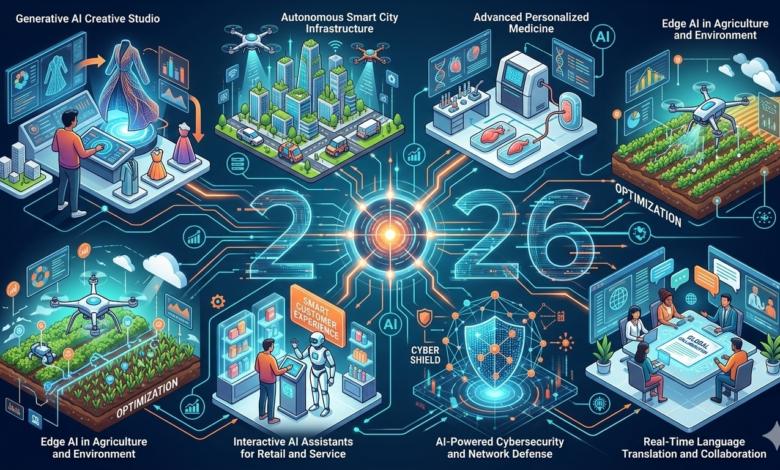
The rapid advancements in Artificial Intelligence are poised to be one of the most significant forces shaping the financial markets in 2026. Investors are increasingly looking for exposure to AI growth beyond the major tech giants, focusing instead on companies that provide foundational technologies and infrastructure for this massive AI buildout. This strategic shift is creating a dynamic investment landscape, offering both immense opportunities and potential pitfalls.
7 Insane AI Opportunities
The year 2026 is shaping up to be a pivotal year for Artificial Intelligence, not just in terms of technological development but also in its profound impact on the global economy and investment strategies. While AI has already demonstrated its transformative power across various sectors, from healthcare to quantum computing, the coming year will likely see a crucial narrative shift from potential to profitability. Companies are under increasing pressure to demonstrate tangible returns on their substantial AI investments, with projections indicating that AI companies will invest over $500 billion in 2026 alone. This intense focus on profitability will lead investors to re-evaluate their portfolios, moving beyond mere hype and towards companies with demonstrable business models poised to capitalize on AI’s long-term value.
The AI Gold Rush: Beyond the Hyperscalers
For years, the AI narrative has been dominated by a few colossal tech companies, often referred to as “hyperscalers.” However, as 2026 dawns, investors are increasingly seeking to diversify their AI exposure by looking at the entire ecosystem that supports this technological revolution. This includes companies involved in building the physical infrastructure for AI, such as data centers, as well as those supplying critical network components, power, and cooling systems. The demand for these foundational technologies is expected to surge, presenting lucrative opportunities for companies that might not be in the direct AI development spotlight but are indispensable to its widespread implementation.
ETF Innovation: Navigating the AI Wave with Precision
Exchange-Traded Funds (ETFs) are evolving rapidly, and in 2026, they are set to play a crucial role in how investors access the AI revolution. The ETF market is projected to continue its impressive growth, with global assets under management potentially reaching over $20 trillion by 2026. We are witnessing a significant trend towards active ETFs, with a substantial percentage of new ETF launches in the active space. This indicates a growing investor preference for skilled management to navigate the complexities of emerging technological trends like AI.
Furthermore, innovation in ETFs is extending to new product types. We’re seeing the emergence of structured note ETFs, including buffer ETFs, which use options and swaps to manage downside and upside exposure. These innovative products are designed to offer defined outcomes and can provide a more nuanced way to gain exposure to market trends, including those driven by AI. Additionally, the concept of tokenization is gaining traction within the ETF space, hinting at future possibilities for accessing digital assets and private markets through more streamlined structures.
Passive Income: The Undeniable Cornerstone of Wealth Building
While AI captures headlines, the fundamental principles of wealth building remain paramount. Passive income streams are more critical than ever in 2026, offering a powerful way to generate wealth outside of traditional employment. The landscape of passive income is expanding, with digital ventures like e-commerce, online courses, and content creation showing strong growth trends.
Proven Passive Income Strategies for 2026:
- Dividend Stocks: Companies with a history of consistent dividend increases, such as Procter & Gamble and Johnson & Johnson, remain attractive for passive income seekers. These “Dividend Aristocrats” offer a reliable income stream and potential for capital appreciation.
- Real Estate: From rental properties and REITs to short-term rentals, real estate continues to be a robust avenue for passive income. The key is strategic investment and understanding market dynamics.
- Digital Products and Online Courses: Leveraging expertise to create digital assets like e-books, templates, or online courses offers scalable passive income potential.
- ETFs: As mentioned, ETFs provide a diversified and accessible way to invest in various asset classes, generating passive income through dividends and capital gains. They are a foundational element for many long-term wealth-building strategies.
- High-Yield Savings Accounts and Bonds: While offering lower returns, these provide a stable and low-risk income stream, essential for diversifying passive income portfolios.
The Path to FIRE: Financial Independence, Retire Early in 2026
The FIRE movement continues to gain momentum, with more individuals setting ambitious goals for financial independence and early retirement in 2026. The core principle remains: aggressively build wealth to achieve financial freedom sooner rather than later. This involves a dual approach: increasing savings rates significantly and optimizing investment strategies.
Key FIRE Strategies for 2026:
- Aggressive Savings Rate: Aiming for savings rates of 50% or higher is common among FIRE adherents. This can be achieved through increasing income via side hustles and passive streams, alongside diligent expense reduction.
- Systematic Investing: Automating investments is crucial. By setting up regular contributions to retirement accounts and brokerage accounts, investors can remove emotional decision-making and ensure consistent wealth accumulation.
- Tax Optimization: Maximizing tax-advantaged accounts (like 401(k)s, IRAs, HSAs) and employing strategic tax planning can significantly enhance long-term returns. Consulting with a tax professional is advisable.
- Diversified Income Streams: Relying on multiple passive income sources provides resilience and accelerates the journey towards FIRE.
The Wealth-Builder’s Viewpoint
The year 2026 presents a unique confluence of technological advancement, market evolution, and individual financial aspirations. AI is not just a sector; it’s a transformative force that will underpin many investment opportunities. However, true wealth building is a marathon, not a sprint. It requires a disciplined approach that balances high-growth potential with robust risk management.
Investors should focus on building diversified portfolios that capture the upside of emerging technologies like AI, while also maintaining a strong core of stable, income-generating assets. The rise of active ETFs and innovative structured products offers sophisticated tools to navigate this complex environment. Simultaneously, the enduring power of passive income and the strategic pursuit of financial independence through the FIRE movement provide timeless pathways to long-term financial security.
The key to success in 2026 lies in adaptability, informed decision-making, and a commitment to consistent action. By understanding the market context, implementing a step-by-step blueprint, and critically analyzing risks and rewards, investors can position themselves to not only weather market volatility but also to thrive in the evolving economic landscape.
Final Verdict
The wealth-building landscape in 2026 is energized by the AI revolution, offering unprecedented opportunities for growth. However, sustainable wealth creation hinges on a diversified strategy that embraces technological innovation while remaining grounded in sound financial principles. By strategically investing in AI-driven companies and infrastructure, leveraging innovative ETF products, cultivating multiple passive income streams, and adhering to the disciplined principles of the FIRE movement, individuals can forge a powerful path toward significant wealth accumulation and enduring financial independence.
—